Tampilkan postingan dengan label search trends. Tampilkan semua postingan

Senin, 08 Maret 2010

And the searches go to...

The Oscars®: glitz, glamor, gossip, gold statuettes, much fanfare — and for many fans, Google search is increasingly a part of watching this live TV experience. Before and during the Academy Awards® broadcast in the U.S., we saw related queries on Google dominating the hot searches list on Google Trends. People searched for the TV schedule, printable ballots for voting on favorites, streaming video sites, nominee and film information, celebrity chatter and whatever else caught your attention. Here's a snapshot:

Fashion
Everyone knows the red carpet is all about the gowns. So which actresses made the best (or worst!) dressed list in search? Zoe Saldana's purple Givenchy haute couture gown won the day in searches, with just a few more queries than runner up Miley Cyrus, who walked down the carpet in one of Jenny Packham's finest. Both beat searches for Sandra Bullock's dress (Marchesa) by large margins. Sarah Jessica Parker, always the fashionista, ranked a distant fourth in Chanel. Certain designers were also popular in search, thanks to the stars who wore (and name-dropped) them. Elie Saab (worn by Anna Kendrick), Armani Prive (Amanda Seyfried, Jennifer Lopez) and Marchesa (Sandra Bullock, Vera Farmiga) were all rising trends.

Winners
Throughout the night Oscar®-related searches rose and fell as nominations were introduced and winners announced. Avatar had the most searches before the ceremony, but as The Hurt Locker received more awards, searches for that film exceeded all others and peaked when it won Best Picture. Precious also had a good run throughout the night. Its peak matched that of "Avatar" during the ceremony:


The awards for best actor, best actress and best director are some of the most-anticipated in the program. There was a considerable amount of buzz about Jeff Bridges, Sandra Bullock and Kathryn Bigelow before last night, and considerable spikes in search volume when they each won. Here's a look at a few of the star searches last night:


Finally, the evening wasn't all about big wins. The awards help expose more obscure films — shorts, documentaries and foreign-language — to a much larger audience. Searches for these titles typically went up tenfold during the evening, and if they took home a gold statue, search volume spiked as much as 100 times higher. Music by Prudence, Logorama, Food, Inc., The Cove and The Secrets in their Eyes all experienced an exponential explosion of queries.

Gossip and memorable moments
People are always eager for more information about the Hollywood stars — personal stats like age, height, family and dating status. During this year’s Oscar® ceremonies, Kathryn Bigelow's height and Miley Cyrus's mother's tattoos were hot topics. Whose girlfriend was most searched for? Easy. George Clooney's (Elisabetta Canalis).

So what were the most memorable moments of the broadcast? When George Clooney wandered off the red carpet to greet the crowd, queries on [clooney] shot through the roof. Ben Stiller’s appearance as a Na'vi was another draw, and queries on him were high during his spoof. Molly Ringwald and Matthew Broderick’s John Hughes tribute triggered a flood of nostalgia; Sixteen Candles, The Breakfast Club, Ferris Bueller's Day Off and Home Alone all saw huge query spikes as well. During the memorial portion of the show, queries surged for those in the industry who passed away in the last year, including Ron Silver, Natasha Richardson, Patrick Swayze and Brittany Murphy. On a lighter note, Sandra Bullock set off a frenetic amount of searches when she mentioned a Meryl Streep kiss in her acceptance speech.

As we've seen in presidential debates, unusual words also generate great interest. The Oscars led to spikes in searches for [catharsis] (from Robert Downey Jr.'s presentation with Tina Fey) and [spooning] (Colin Farrell talking about Jeremy Renner).

We hope you enjoyed the evening, and want to thank everyone for turning to Google search to see the latest. And our parents deserve huge thanks, and our agent... oh, they're telling me to wrap it up...!

Senin, 08 Februari 2010

2010 Super Bowl: Some search touchdowns

While 106 American football players sought yardage in the 2010 Super Bowl, millions of people sought information related to the big game from Google search. We looked at some game-day search trends and data* to see what football fans were searching for this year.

Most searched-for team
To the victor of this year's big game went the search spoils: The New Orleans Saints captured both the NFL championship and the lion's share of Super Bowl team searches in 2010.

Most searched-for player
For leading the New Orleans Saints to their 31–17 win over the Indianapolis Colts — with 288 yards, two touchdowns and 32 of 39 passes completed — quarterback Drew Brees won the Most Valuable Player award. But Peyton Manning earned the status of the Super Bowl's most searched-for player, beating out some tough competition and followed by Drew Brees, Reggie Bush, Hank Baskett and Scott Fujita.

Many fans of Reggie Bush also expressed interest in his girlfriend Kim Kardashian; searches for her name, both on its own and linked with Reggie Bush's, spiked significantly during the game. Additionally, search volume for football great Walter Payton — after whom the Walter Payton Man of the Year Award was named — was as high as that for some of the game's top five most searched-for players.

Most searched-for coach
Behind every team is a great coach, and behind every coach is an engaged online community. This year, Sean Payton, who has coached the New Orleans Saints since 2006, was the most searched-for team leader.

Most searched-for party planning terms
Die-hard football fans and casual shindig hosts alike look forward to game day for its party planning possibilities. This year, people went online to find all the information they needed to watch the game and to make sure they were well-fed during the same. Some top rising recipe searches on game day included buffalo chicken dip, guacamole, 7-layer dip and pigs in a blanket.

People were also looking for information on how and when to watch the game; searches related to the start time of the game and watch Super Bowl 2010 online were both notably high.

Most searched-for advertisers
In addition to spotlighting some of the finest football teams in the U.S., the Super Bowl is a showcase for some of the funniest, coolest and most interesting creative advertisements each year. This year, the prospect of "free" dominated the searched-for ads. The offer of free pants from Dockers garnered a spike of queries which continued throughout the game. Twice, Denny's advertised free grand slam breakfasts, leading to two bumps in searches for Denny's free breakfast, Denny's locations and Denny's.

Searchers also enjoyed ads featuring celebrities — including Betty White, who played football and ate Snickers bars, and Megan Fox, who used a Motorola smartphone.

We told the story of an American who finds love in Paris — using search queries. Google Super Bowl commercial led searchers to the love story of a man who dutifully searched for information on how to impress a French girl, long distance relationship advice and how to assemble a crib. (Full disclosure: We work for this advertiser.)

Stay tuned
Which advertiser won the position of Favorite 2010 Super Bowl Ad, according to fans? Check out YouTube's Ad Blitz results on February 17 to see which Super Bowl ad received the greatest number of positive votes from the YouTube community. Until then, you can use Google Trends to see more Super Bowl-related queries.

*We used internal tools to quickly gather this data. All of the search queries we looked at were anonymous — no personal information was used.

Selasa, 12 Januari 2010

Google Flu Trends in 121 U.S. cities

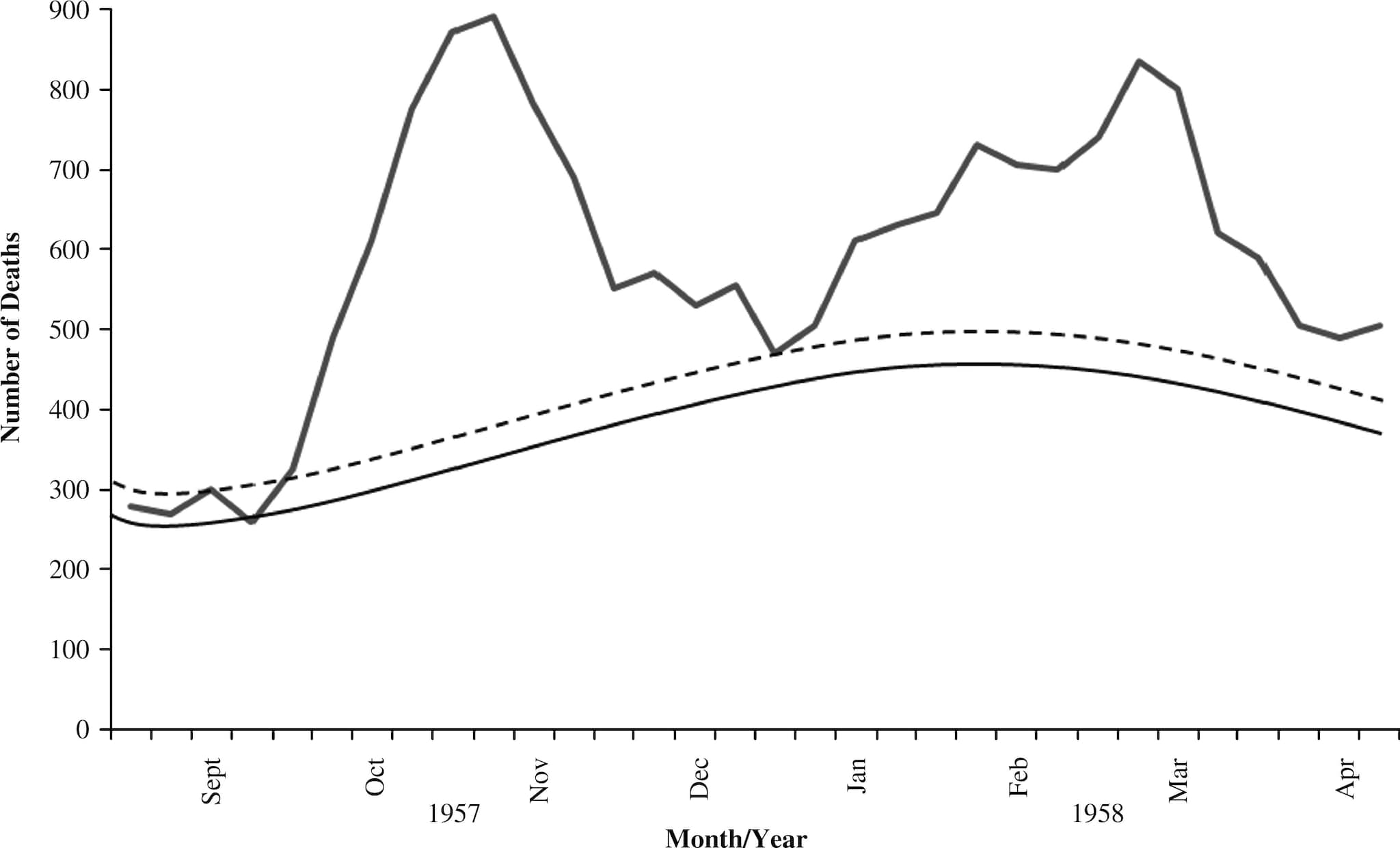
In contrast to the unusually early spike of flu activity we saw this October, Google Flu Trends is currently showing a low level of activity in the United States. Since the strain of influenza that is active (H1N1) is novel, no one knows exactly what will happen next. However, the CDC is warning that one possibility is a second spike of flu activity, which is what occured in 1957 when another novel strain of influenza spread in the United States.

We've been chatting with public health officials about new ways we can help people understand the spread of flu during this unusual time and today we're excited to bring city level flu estimates to 121 cities in the United States.


By tracking the popularity of certain Google search queries, we're able to estimate the level of flu in near real-time. Google Flu Trends is updated daily and may provide early detection of flu activity, since traditional flu surveillance systems often take days or weeks to collect and release data. These city level estimates are "experimental," meaning they haven't been validated against official data. However, the estimates are made in a similar manner to our U.S. national estimates, which have been validated. Check out our YouTube video for a quick introduction to this system.

We're pleased to be announcing this addition to Google Flu Trends during National Influenza Vaccination Week. If you're looking for a flu vaccine location near you, please visit the flu shot finder.

Selasa, 01 Desember 2009

Zeitgeist 2009: the collective consciousness

Curiosity — it's why we search the web. Whether searching for the latest news, a popular holiday gift, a website you've heard about, the latest singing sensation, or the trailer to a blockbuster film, you come to Google with something on your mind. And since 2001, we've been releasing our annual Zeitgeist — our view into the spirit of the times — which includes the fastest-rising Google searches (those that had the greatest surge in the past year) and most popular (those that are consistently searched in large volume, like [weather]). By exploring 2009's popular and fastest rising search terms, we're able to share a glimpse into what's been on the mind of the global community this year. 

So what has captivated the minds of searchers around the world this year? As millions of fans said goodbye to the King of Pop, Michael Jackson led the list of our top 10 fastest rising queries across the globe. And a new star was born, too — quirky pop singer Lady Gaga became a search sensation the world over. In addition to appearing on many regional fastest-rising search term lists, from the Czech Republic to Switzerland and Kenya to the United Kingdom, Lady Gaga also landed in the #7 spot on the global fastest rising list.

This year's Zeitgeist also confirms that the social web is alive and well. In a sweeping confirmation of the web's ability to connect us, both Facebook and the Spanish social-networking site Tuenti appeared on the fastest rising searches at #2 and #3 respectively. Twitter also made our global list for the first time at #4 — undoubtedly propelled by celebrity tweeters from Ashton Kutcher to Miley Cyrus. 

With the global community closely watching the swine flu epidemic, [schweinegrippe], [gripe porcina], [豬流感], [h1n1], [świńskiej grypy] and [sikainfluenssa] were heavily queried the world over. In fact, in the U.S., swine flu was searched even more than another major event of the year: the inauguration of President Obama.

In the U.S., 2009 also saw many people express their thrifty consciousness in response to the sour economy. The most popular made by hand searches including everything from baby food (#2) to laundry detergent (#6). And as more and more turned to comfort foods and recipes to make at home, [chili] became the most popular recipe searched for across the country.

It's because of curious searchers like you, and the billions of searches you do throughout the year, that our annual Zeitgeist has become an insightful look into a global mindset. So please check out our Zeitgeist site, which showcases many of these interesting trends across various categories and countries, and more about how we create the lists. We're already anticipating what trends we will see in 2010! 

Kamis, 01 Oktober 2009

Searching for the next Olympics host city

Tomorrow morning, the International Olympic Committee (IOC) will decide the host for the 2016 Summer Olympic and Paralympic games. Competing for the honor are four bid cities: Chicago, Madrid, Tokyo and Rio de Janeiro.

In past years, in addition to seeing a surge in searches during the Games, we typically see a significant swell in searches leading up to the announcement about which will be the next IOC host city. Just two years ago, people from across the world turned to Google to learn more about Sochi, Russia — the newly announced host of the 2014 winter games. Similar patterns emerged across the United Kingdom as citizens searched to learn more about the London 2012 bid.

At Google we've always shared the world's interest in the Olympics, and have expressed that interest through dozens of Google doodles both while the games are occurring (last August, the Beijing Games inspired many doodles) as well as celebrating the naming of host cities (Sochi in 2007). Also, last summer the world followed along at home using our Beijing 2008 Summer Games medal tracker on their iGoogle page or through the Olympic Games onebox on Google.com.

As decision day for 2016 approaches, we have Googlers in our offices in Chicago, Madrid, Tokyo (and in Sao Paulo cheering on Rio) who are watching and cheering on their cities along with the rest of the world. With the decision tomorrow, we thought it would be interesting to see what people from the host cities and countries are searching for. We've shared some of the coolest tidbits below.

Searches from around the globe for [2016] have reached an all-time high. Search volume from Spain dwarfs Brazil, the United States and Japan:


In Chicago, searchers are looking more for info on Rio's bid than Madrid's or Tokyo's, possibly indicating that Chicago residents view Rio's bid as the most competitive:


Across Tokyo, people are searching more frequently for information about the Olympics and their city's chances of landing the 2016 games:


Searches translate to [olympics] and [olympics tokyo], in blue and red, respectively

Although Oprah is widely viewed as the most popular full-time Chicago resident in the world, Chicagoans today are searching more for the Olympics than their favorite talk show host:


In Brazil, searches for [jogos olimpicos] (olympic games) have risen 650% over the course of the year. And when looking at Brazilians' interest in [rio 2016] as a search term, the top related search was for [roda rio] (a 36-meter tall ferris wheel, capable of holding 144 passengers with a gondola for the disabled). The ferris wheel, located on Copacabana, was completed in January of this year as part of the city's Olympic bid campaign.

In Spain, search volume for [juegos olímpicos] (olympic games) has more than doubled in the last month alone.

On Google Trends, [2016 olympic decision] has been steadily moving up all day, with the largest volume of searches coming from Chicago and Atlanta:


Ultimately, it comes down to the votes of the 106 IOC members. Around the world, hundreds of Googlers, along with many millions of Google users, eagerly await their decision. Whichever city wins, we can't wait for the Games to begin.

Posted by Jim Lecinski, Managing Director, U.S. Sales (and proud Chicagoan)

Senin, 28 September 2009

Keep up with the latest trends using Google Search

Today, we're launching a new web search feature that will help you stay in touch with the latest trends on the web.

You might already be familiar with Hot Trends, which lists the fastest rising searches on the web at any given hour. Now, when you search Google.com and your query matches one of the top 100 fastest-rising search terms, we'll show you a graph at the bottom of page, with more information — like how popular the query is, how fast it's rising over time, and other useful data.

Below is a picture of what you'd find today if you searched for [reina capodici], who just wed American Idol star Justin Guarini. Or try another example: [gotthard base tunnel], which is set to become the longest tunnel in the world. (But make sure you search for these examples today — nothing stays hot for long.)


To coincide with this change, we've also reduced the number of trends listed on the Google Hot Trends homepage to 40 from 100. This feature, however, will show up for any query that matches the top 100. We hope this change will make for a simpler user experience, and help you focus better on the top, most interesting content.

This new feature is available in the U.S. and Japan. We hope it will help you keep up with everything there's to know about the latest trends online. No more being out of the loop at your office watercooler!


Kamis, 03 September 2009

Google Domestic Trends: tracking economic sectors

Today, we're really pleased to launch Google Domestic Trends on Google Finance.

Google Domestic Trends tracks Google search traffic across specific sectors of the economy. The changes in the search volume of a given sector on google.com may provide useful economic insight. We've created 23 indexes that track the major economic sectors, such as retail, auto and unemployment.

For example, the Google Luxuries Index tracks queries like [jewelry], [rings], [diamond], [ring], [jewelers], [tiffany] and so forth. As you can see from the screenshot below, this index has seasonal spikes in December — however, in the last two years there has been a pronounced decrease as the recession made consumers wary of spending on luxury items.


The Auto-Buyers Index is also interesting, especially the dramatic 40% increase correlated with the launch of the Cash for Clunkers program in the U.S.:


These charts let you easily compare actual stocks and market indexes to Google Trends. And the data for these indexes are available for download — so you can use it with your own models.

Read more about this on the Google Finance Blog, and be sure to check out the Google Research Blog for info on Hal's research on using Google Trends data to predict economic activities.

Jumat, 26 Juni 2009

Outpouring of searches for the late Michael Jackson

At Google, we are moved by the life and untimely passing of Michael Jackson. As word spread of his death, millions and millions of people from all over the world began searching for information about the pop icon. The following chart shows the meteoric rise in related searches around 3:00pm PDT:


Search volume began to increase around 2:00pm, skyrocketed by 3:00pm, and stabilized by about 8:00pm. As you can see in Google Hot Trends, many of the fastest rising search queries from yesterday and today have been about Michael Jackson's passing (others pertained to the death of another cultural icon, Farrah Fawcett). People who weren't near a computer yesterday turned to their mobile phones to check on breaking news. We saw one of the largest mobile search spikes we've ever seen, with 5 of the top 20 searches about the Moonwalker.

The spike in searches related to Michael Jackson was so big that Google News initially mistook it for an automated attack. As a result, for about 25 minutes yesterday, when some people searched Google News they saw a "We're sorry" page before finding the articles they were looking for.

Michael Jackson led an amazing and controversial life in the public eye. Many of us have a "Michael Jackson story." Mine is that he actually taught me how to moonwalk — thanks to many an hour I spent in front of the television trying to mimic his performances. Regardless of your story or personal opinions about this astounding performer, global interest in the King of Pop is undeniable.

Rabu, 13 Mei 2009

Understanding health-related searches

As we blogged last summer, there are lots of experiments running on Google web search all over the world. Today we've started a temporary experiment that some people might find interesting: we're researching how Google users search the Internet when they or someone they know is feeling sick.

Understanding how people search when they're feeling sick is an important problem to solve, as it can help improve projects like Google Flu Trends, which uses aggregated search data to detect influenza epidemics. Statistics gathered in this experiment may also help Google deliver more relevant search results in the future. For example, someone who searches for [arthritis pain] to understand why an aging parent is experiencing joint pain might want to learn about nearby health facilities and potential treatments, whereas somebody who searches for [arthritis pain] because she is doing a research project might want results about how common arthritis is and what its risk factors are. Rather than make educated guesses about how many users are searching because they're sick, we're running this experiment to collect real statistics. This is not a permanent change, but a short-term experiment. A small percentage of random health-related searches will trigger the poll question.

For example, at the bottom of the search results for [headache], some users will see a survey which asks whether they were searching because they or someone they know has a headache:


Similarly, if you happen to search for [ibuprofen], a common anti-inflammatory drug, you might see a survey which asks whether you were searching because you or somebody you know is taking ibuprofen:


Data collected in this survey will be aggregated across thousands of users. Survey responses will be stored together with the original search query, but will not be associated with email addresses or other personally identifiable information. Survey data will not be used for advertising — it will only be used to help Google improve health-related search results and to help refine public health trends based on aggregated search queries, much like Google Flu Trends. You can learn more about how Google protects users' privacy at our Privacy Center.

For more information, please take a look at our FAQ.

Rabu, 06 Mei 2009

Google Trends on your website

One thing we've noticed here at Google over the years is that the more popular something becomes, the more people search for it online. Our annual zeitgeist catalogs some of the more interesting trends we've seen in a year's worth of web search data. We also like to keep our eye out for more timely events, such as the U.S. presidential inauguration.

As we head into the last month of this season's "American Idol," we thought this would be a good opportunity to introduce our new embeddable Google Trends gadget to track your favorite trends, right on your own website. It's as easy as "cut and paste" to showcase the rising popularity of your own idols, even if they're not on a hit television show. You get to choose which trends you want to track.

I've been using Google Trends to follow my favorite "Idol" contestants for the past three years. It all started in 2006 when I was a Chris Daughtry fan. Looking at the search trends I could tell I wasn't the only one, and I felt pretty good about the odds that Chris was going to fare well against the other contestants.


Going into the final four, Chris had a lead on Elliott Yamin, and I was pretty confident he'd advance. But over the week leading up to the performance, Chris' lead began to diminish. Despite his early lead, Chris ended up getting eliminated. I was totally bummed, but wasn't all too surprised given that they were neck and neck on Trends days before elimination night.

Fast-forward to 2008. I was rooting for David Cook, and after each performance I'd check so see how he was doing on Trends.


I was excited to see him getting more and more popular each week, and each week I could rest a little easier when I found out that David was more popular than the other contestants. David ended up walking away with the crown that year, and I had finally picked a winner!

This year, I had the good fortune of attending an "American Idol" show in person. Not really knowing what to expect, I was completely blown away by the evening's final performance: Adam Lambert's rendition of the Tears for Fears song "Mad World." I could literally feel the building move under my feet from his powerful vocals and the roar of the crowd. Since then I have been an Adam fan all the way. And just when I thought that Allison Iraheta was closing in, Adam raised the bar yet again with his rockin' performance of Led Zeppelin's "Whole Lotta Love." Let's see what Google Trends has to say about Adam this week. And if after last night's show you're worried that your favorite "Idol" had a bad night and might not make it to the next round, see if you can glean some insights from the search trends.

Selasa, 11 November 2008

Tracking flu trends

Like many Googlers, we're fascinated by trends in online search queries. Whether you're interested in U.S. elections, today's hot trends, or each year's Zeitgeist, patterns in Google search queries can be very informative. Last year, a small team of software engineers began to explore if we could go beyond simple trends and accurately model real-world phenomena using patterns in search queries. After meeting with the public health gurus on Google.org's Predict and Prevent team, we decided to focus on outbreaks of infectious disease, which are responsible for millions of deaths around the world each year. You've probably heard of one such disease: influenza, commonly known as "the flu," which is responsible for up to 500,000 deaths worldwide each year. If you or your kids have ever caught the flu, you know just how awful it can be.

Our team found that certain aggregated search queries tend to be very common during flu season each year. We compared these aggregated queries against data provided by the U.S. Centers for Disease Control and Prevention (CDC), and we found that there's a very close relationship between the frequency of these search queries and the number of people who are experiencing flu-like symptoms each week. As a result, if we tally each day's flu-related search queries, we can estimate how many people have a flu-like illness. Based on this discovery, we have launched Google Flu Trends, where you can find up-to-date influenza-related activity estimates for each of the 50 states in the U.S.

The CDC does a great job of surveying real doctors and patients to accurately track the flu, so why bother with estimates from aggregated search queries? It turns out that traditional flu surveillance systems take 1-2 weeks to collect and release surveillance data, but Google search queries can be automatically counted very quickly. By making our flu estimates available each day, Google Flu Trends may provide an early-warning system for outbreaks of influenza.

For epidemiologists, this is an exciting development, because early detection of a disease outbreak can reduce the number of people affected. If a new strain of influenza virus emerges under certain conditions, a pandemic could emerge and cause millions of deaths (as happened, for example, in 1918). Our up-to-date influenza estimates may enable public health officials and health professionals to better respond to seasonal epidemics and — though we hope never to find out — pandemics.

We shared our preliminary results with the Epidemiology and Prevention Branch of the Influenza Division at CDC throughout the 2007-2008 flu season, and together we saw that our search-based flu estimates had a consistently strong correlation with real CDC surveillance data. Our system is still very experimental, so anything is possible, but we're hoping to see similar correlations in the coming year.

We couldn't have created such good models without aggregating hundreds of billions of individual searches going back to 2003. Of course, we're keenly aware of the trust that users place in us and of our responsibility to protect their privacy. Flu Trends can never be used to identify individual users because we rely on anonymized, aggregated counts of how often certain search queries occur each week. The patterns we observe in the data are only meaningful across large populations of Google search users.

Flu season is here, so avoid becoming part of our statistics and get a flu shot! And keep an eye on those graphs if you're curious to see how the flu season unfolds...

Update on 11/21: The team just published an academic paper in Nature, the international journal of science, explaining the science and methodology behind Flu Trends. Check it out for more information.

Selasa, 04 November 2008

Top searches on Election Day (part 3)


The long, long election campaign season culminated today as people made their choices on hundreds of statewide and local contests as well as the race for the next U.S. president. We've kept an eye on Google Hot Trends to decipher what may be meaningful, as well as searches that are "business as usual" on Google. This is the third and final update for today. - Ed.

As of 12 am EST:

If we count the search queries relating to the commercial breaks on election night TV coverage, the entire list of the 100 fastest-rising terms on Google Hot Trends reflect a passion about today's events. As polls closed and the presidential race was called after 11 pm EST for [president obama], people searched for outcomes on state races of interest, such as [al franken senate race], [massachusetts question 2], and [proposition 8] in California. Obsessive viewers noted that cameras captured a sign in Times Square that seemed to say "[cassoulet forever]" (which is odd; it's a classic French country dish), and they were intrigued by CNN's use of [hologram technology] to show non-local notables like musician [will i am] appear on the set with Anderson Cooper.

Even when looking ahead to entertainment after a marathon post-election season, Americans can't stop pondering politics just yet. Two of the top 100 at this hour are for upcoming films [valkyrie] (the true story of an attempt to assassinate Adolf Hitler), and [frost nixon], a dramatic re-telling of Richard Nixon's 1977 TV interview with David Frost. Both films were promoted during commercial breaks in wall-to-wall coverage tonight.

Finally, eager voters (presumably of all persuasions) seem to be looking forward to a new era of [obama jokes].

Top searches on Election Day (part 2)


The long, long election campaign season culminates today as people make their choices on hundreds of statewide and local contests as well as the race for the next U.S. president. Throughout the day, we're keeping an eye on Google Hot Trends to decipher what may be meaningful, as well as what's "business as usual" in Google searches. We'll post updates as interesting trends turn up. - Ed.

As of 6 pm EST:

The election is still top of mind (by a long shot) for most Google searchers at this hour: 87 out of 100 of the fastest-rising terms on Google Hot Trends are still election-related. Since polls are now winding down in the Eastern time zone, people are seeking more info on [voter turnout], [who is ahead in the polls], and other outcomes. And that includes news outlets: fully 25% of the top 100 are seeking the latest [election news]. Searches for news sources run the gamut from [hannity.com] or [slate]; and people are seeking broader coverage, too, on everything from [foxnews.com] to [cnn newsroom] and [msnbc politics]). Of course, a big player in election commentary this season, (Comedy Central's [indecision 2008]) now seems to be a staple. In the far west, California voters are seeking out [prop 8 results], the heavily-funded (on both sides) initiative regarding gay marriage.

And in the Midwest, Chicago-area searchers are keen to get [metra schedule] information, which should help them get to polls -- or maybe to Grant Park for this evening's massive event planned for Senator Obama.

Top searches on Election Day (part 1)


The long, long election campaign season culminates today as people make their choices on hundreds of statewide and local contests as well as the race for the next U.S. president. Throughout the day, we're keeping an eye on Google Hot Trends to decipher what may be meaningful, as well as what's "business as usual" in Google searches. We'll post updates as interesting trends turn up. - Ed.

As of 12 noon EST:

No fewer than 87 of the top 100 fastest-rising terms relate to the election right now. Of these, 10 relate to searches for state information, including [florida sample ballot], [ohio ballot issues 2008] and [where to vote in texas].

We practical Americans are keen to be rewarded for our participation, too: [free stuff for voting] refers to the giveaways some retailers are offering citizens who stop in. One ubiquitous coffee purveyor is called out in particular: [starbucks free coffee], [starbucks election] and [starbucks vote] are clear indicators of the caffeine boost people anticipate needing today.

Keen-eyed citizens are also on the lookout for information on [voting lines] and [voting problems] as well as a better understanding of [how does the electoral college work]. And lest you think it's all about the major parties, at this hour Independent Party candidate [ralph nader] is #59, and Libertarian [bob barr] is #98.

And the excitement of the day boils over: #92 on the current Hot Trends is [when will we know who is president]. Google can't say for sure; we'll keep watching along with you.

In addition to today's searches, we also took a look at the top campaign-related queries during the general election season: Sept. 1-Nov. 4. Here they are:

Top Political Personas
Obama
Palin
McCain
Tina Fey
Joe Biden
Chuck Norris
Cindy McCain
Bristol Palin
SNL Palin
Colin Powell

Top Political Topics
debate
Social Security
presidential debate
polls
voter registration
gas prices
oil prices
FDIC
electoral college
Socialism

Top Political News Sources
Drudge
Huffington Post
Gallup
Real Clear Politics
Rasmussen
Rush Limbaugh
Politico
538
CNN Politics
Daily Kos

Jumat, 31 Oktober 2008

What are you going to be for Halloween?

In 2006 it was a pirate. Halloween party-goers donned eye patches, tricornes, and the Jolly Roger, inspired by favorite seafarer Captain Jack Sparrow. And last year the search was on for a lot of blond wigs and microphones à la teen pop idol Hannah Montana.

Halloween being one of our favorite holidays, we couldn't wait to see what the hot getups of 2008 would be. Using Insight for Search we tracked the fastest rising searches related to Halloween costumes for this year's ghoulish festivities.

Here are some of the "costume"-related queries (in the U.S.) that have seen the most growth for 2008 — don't be surprised when you run into some of these outfits roaming the streets on All Hallows' Eve.


If you're like me, you found your inspiration in the past 24 hours. However, it looks like others are more serious — according to this Google Trends graph, searches for costumes have been increasing since July.


Around Google, we've been planning our outfits for months as well. Not even rain could stop us from showing off our fiendish finery at this year's Googleween in Mountain View. And have a scary-happy Googleween yourself!


Rabu, 08 Oktober 2008

The Presidential debate: Expanding the town hall

As we promised, here's an update on the search patterns we observed during last night's presidential debate. While a few lucky citizens were able to ask the candidates questions directly, millions of others used Google to find their answers.

Similar to last Thursday, people sought to understand the meaning of several words mentioned in the debate: morass, commodity, junket, cynicism, and cronyism to name a few. In the chart below you can see four of the most popular queries during the debate. People were quite interested in both Meg Whitman and Warren Buffett, who were mentioned as potential candidates for the Secretary of Treasury, but the biggest rising query was Senator McCain's paraphrasing of Theodore Roosevelt's motto. Both candidates spoke against genocide while discussing the role of the United States as a peacekeeper, and as we saw in the vice presidential debate, nuclear energy and weapons were prominent topics.

Queries occurred as the candidates talked, but
the query volume dropped after 90-minute debate ended.

Here's an additional view on queries for each of the candidates, charting queries from swing states (which had no more than a 5% gap between votes for George Bush and John Kerry in the 2004 election) and non-swing states. Swing states generated proportionally more queries for the candidates than non-swing states. Both candidates peaked at the end of the debate, with McCain showing a larger spike while Obama has a larger overall volume.

Queries for the presidential candidates form a higher fraction of all queries in swing states.

We also were curious how queries for Senator Biden and Governor Palin during their debate compared to queries for Senators McCain and Obama last night. As you see here, searches on the candidates during the VP debate came out on top:

Queries containing "Biden" and "Palin" had higher peaks during last week's debate
than did "McCain" and "Obama" queries last night.

Using Google Hot Trends you can see some of the more interesting things people were researching during this debate. Visit Google Election Trends to learn about longer-term election-related Google search queries, and read our previous post for the earlier VP debate queries.

Senin, 06 Oktober 2008

The VP debate: Candidates, questions, and queries

If information is the currency of democracy, as Thomas Jefferson allegedly said, then during last Thursday's vice-presidential debate between Senator Biden and Governor Palin a lot of people used Google Search to get a bit wealthier, metaphorically speaking. Using Google Hot Trends, we can see some of the more interesting things that people were researching, and you can do the same to follow along yourself during tomorrow night's second presidential debate (9 PM ET). But first, here's what people were curious about during the VP match.

Many people were simply interested in understanding the meaning of particular terms. Governor Palin called Senator McCain a "maverick" several times, sending many viewers to Google to query definition of maverick, what is a maverick, and define:maverick.

As the debaters spoke, voters queried for more information.

When Biden mentioned that the "theocracy controls the security apparatus" in Iran, users searched for the meaning of theocracy — as they did when he spoke of the windfall profits tax.

Getting these definitions got a bit tougher when the candidates couldn't even agree on pronunciation. Discussion about a certain type of energy caused a flurry of queries: nucular vs nuclear, nuclear pronunciation, palin nucular, and even nukular. And when Senator Biden talked about the "7,000 madrasses built along [the Pakistani-Afghan] border", the queries ranged from madrass, madrases, madrasa, and even madras, a major city in India that's most definitely not on the Pakistani-Afghan border.

Governor Palin's claim that "Israel is in jeopardy of course when we're dealing with Ahmadinejad as a leader of Iran" led viewers to try to learn more about this leader even if they could not spell his name. They searched for [Achmadinijad], [Akmadinijad], [Akmadinajad], and the correct Ahmadinejad. Some did not even try, instead looking for [president Iran] and [Iran leader]. The Governor also referred to General McKiernan, the U.S. military leader in Afghanistan, as "McClellan", sending viewers in search of McClellan, general in Afghanistan, General McClellan Afghanistan, and general Afghanistan surge. Some searchers eventually did find the correct general, but not that many.

Historical references abounded. When Senator Biden claimed "This is the most important election you will ever, ever have voted in, any of you, since 1932", some people wanted to know what it was about the 1932 presidential campaign between Herbert Hoover and Franklin Roosevelt that was so special. And twice as many them wanted to know about that "shining city on a hill", a phrase from Ronald Reagan's farewell address that was originally coined in 1630 by John Winthrop.

When Senator Biden offered a civics lesson ("Article I of the Constitution defines the role of the vice president of the United States, that's the Executive Branch") many people checked, and learned that Article I of the Constitution describes the legislative branch of the U.S. government. The executive branch is described in Article II. Others just searched directly for the role of vice president and vice president duties.

People searched on clean coal and took a look at Senator Biden's position (as the candidate asked them to) with queries like Biden clean coal.

These are some of the more interesting queries, but which were the most popular ones? Among the candidates, Senator Biden was a big winner. Searches on him soared more than 70-fold, compared to a week earlier. Governor Palin, much more of a search favorite in the weeks leading up to the debate, only saw a 6x jump, but her volume outpaced Senator Biden's.

Searches for the VP candidates peaked near the debate's end.

Beyond names, two search terms which triggered the most searches were [nuclear] (a 130x spike compared to a week earlier) and [maverick] (70x). [Register to vote] was also quite popular; we even have a special site for that.

The Commission on Presidential Debates, which hosts the debates, has stated its objective as providing "the best possible information to viewers and listeners". From Google's perspective — the little search box on viewers' and listeners' computers and mobile phones — the vice presidential debate did a pretty darn good job.

We'll give you an update on tomorrow night's debate later this week. In the meantime, keep an eye on the most recent queries yourself on Google Hot Trends; they change frequently and will start to reflect the debate's talking points soon after it finishes.

Selasa, 10 Juni 2008

A new flavor of Google Trends


The latest version of Google Trends is now live! If you've used it in the past, you know that Google Trends can be used to see how popular certain search terms are across geographic regions, cities, and languages. With our latest update, you can now see numbers on the graph download to a spreadsheet. (Note: Both these functions are available after you've signed in to your Google Account.)

Let's walk through an example of how these nifty new features come into play. With the hot summer months rapidly approaching in many parts of the world, many of us turn to the frosty treat of ice cream to cool off. But have you ever wondered which flavor people search for more frequently: vanilla or chocolate?

First, let's take a look at the searches for vanilla ice cream and chocolate ice cream separately. Here's what vanilla looks like on its own:


You'll notice a number at the top of the graph as well as on the y-axis of the graph itself. These numbers don't refer to exact search-volume figures. Instead, in the same way that a map might “scale” to a certain size, Google Trends scales the first term you've entered so that its average search volume is 1.00 in the chosen time period. So in the example above, 1.00 is the average search volume of vanilla ice cream from 2004 to present. We can then see a spike in mid-2006 which crosses the 3.00 line, indicating that search traffic is approximately 3 times the average for all years. Read more about how we scale the data.

Here's what chocolate looks like on its own:


Let's look at how vanilla compares with chocolate. Keep in mind that when you compare multiple terms, they'll all be scaled relative to the first term you've entered.


As the numbers on the top of the graph indicate, vanilla ice cream has about 30 percent less search traffic than chocolate ice cream (and it's no surprise that both flavors are more popular during the summer months!) You can also see that the data has been ranked by vanilla, because it was the first search term we entered. However, you can use the drop-down menu beneath the graph to change the ranking to chocolate instead.

Google Trends is not only a fun tool; it also offers some practical uses as well. Suppose you own an ice cream shop and don't know which flavors to serve, or suppose you're responsible for stocking supermarkets across the country; Trends can help you explore the popularity and seasonality of your products. To conduct your own, more detailed analyses, you can now easily export Trends data to a .csv file (a common format to import/export data), which can be opened in most spreadsheet applications. When you use the export function, you'll also have the choice of using either relative scaling (what we've shown here) or fixed scaling (scaled to a specific time range).


We hope you enjoy this new flavor of Google Trends. And of course, we want to know: which flavor of ice cream do you like best?

Senin, 25 Februari 2008

Searching for the Wisconsin primaries


We're in the midst of a big election season, and of course that means pollsters and pundits have lots to say about where it will all end. I've been curious to see if their predictions match up with trends in online searches. So as my 20% project, I devised a method to track the number of searches for each candidate's name. I wanted to visually represent the trends I found, so I plotted them onto Google Maps to see where the searches were concentrated. It's fascinating to see how people in a region have turned to the Internet to engage in the primaries.

Last Tuesday during the Wisconsin primary, the maps for Democratic queries (blue) and Republican queries (red) in Wisconsin turned out slightly different than each other. The circles are proportional to the amounts of search terms that contained the name of a Democratic or Republican candidate. Of course, the data includes queries for both positive and negative keywords for each.

From the data, we can see that Democratic candidates were searched more often in Madison, while Republican candidate queries were more widely dispersed throughout the state:


We'll continue to study interesting search trends as they apply to election queries and share other findings with you.

Update: Corrected title.

Kamis, 07 Februari 2008

Super Tuesday wrapup


On Super Tuesday, voters couldn't cast their ballots online, but we were excited to see so many people turn to the Internet to participate in the election. Americans and many others from around the world sent a clear message on Tuesday -- and we heard you! Here are some of our favorite highlights:
  • "Tweets" from politically-engaged Twitter users spanned a wide range of expressions. You spoke your mind: "In addition to Super Tuesday, today is also Fat Tuesday. Super Fat Tuesday -- finally, a day I can relate to!" (ejacqui, UK); you reported election results: "Can someone please explain why 10% of Californians are voting for Edwards? Don't they read the news?" (paul_irish, Boston, MA); you relayed conditions at the voting booths: "CA Precincts are worried about running out of ballots." (mizlit, Montara, CA).

    Of course, we had a favorite:


  • Searches for [super tuesday results] hit the top of our Hot Trends list early in the afternoon and stayed number one through much of the night. Related terms like [primary results], [where do i vote] and [super tuesday exit polls] were also in the top ten for significant chunks of time. Senator Obama turned out to be the most widely-searched candidate of the day, and [health care] emerged as the most popular policy issue.

    • Voters, news organizations, and candidates submitted hundreds of videos to YouTube's YouChoose08 Super Tuesday site, providing for an interesting integration of unique content all on one platform. Check out some of the top videos uploaded by voters, news organizations, and the candidates themselves. And here's one of the videos we thought captured the moment well: